Understanding the Importance of Bile Acid Malabsorption in Inflammatory Bowel Disease
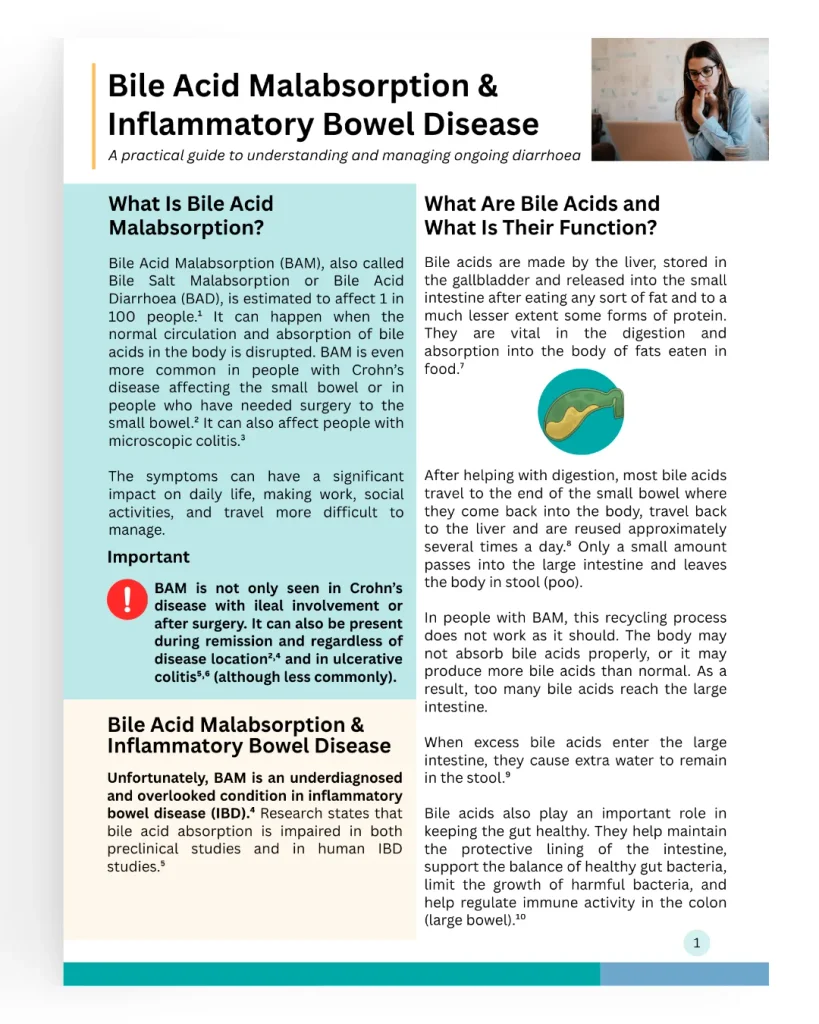
Bile Acid Malabsorption (BAM), also called Bile Salt Malabsorption or Bile Acid Diarrhoea (BAD), affects 1 in 100 people. It can happen when the normal circulation and absorption of bile acids in the body is disrupted. BAM is even more common in people with Crohn’s disease affecting the small bowel or in people who have needed surgery to the small bowel. It can also affect people with microscopic colitis. Importantly, BAM is not only seen in Crohn’s disease with ileal involvement or after surgery. It can also be present during remission and regardless of disease location, and in ulcerative colitis (although less commonly).
Unfortunately, BAM is an underdiagnosed and overlooked condition in inflammatory bowel disease. Recognising BAM can lead to more accurate diagnosis and appropriate treatment.
New Resource: Bile Acid Malabsorption & Inflammatory Bowel Disease
A new evidence-based handout has been developed to raise awareness of bile acid malabsorption in IBD. The aim is to support patients and healthcare professionals in recognising the condition and accessing timely diagnosis and treatment. I developed this resource in collaboration with advanced and registered specialist gastrointestinal and oncology dietitian Gina Giebner.
The resource provides an overview of key aspects of living with BAM, including why BAM matters in IBD, symptoms, diagnostic testing, treatment options (medication, diet and lifestyle, psychological support), other helpful resources and practical advocacy tips.
The content is medically reviewed.